



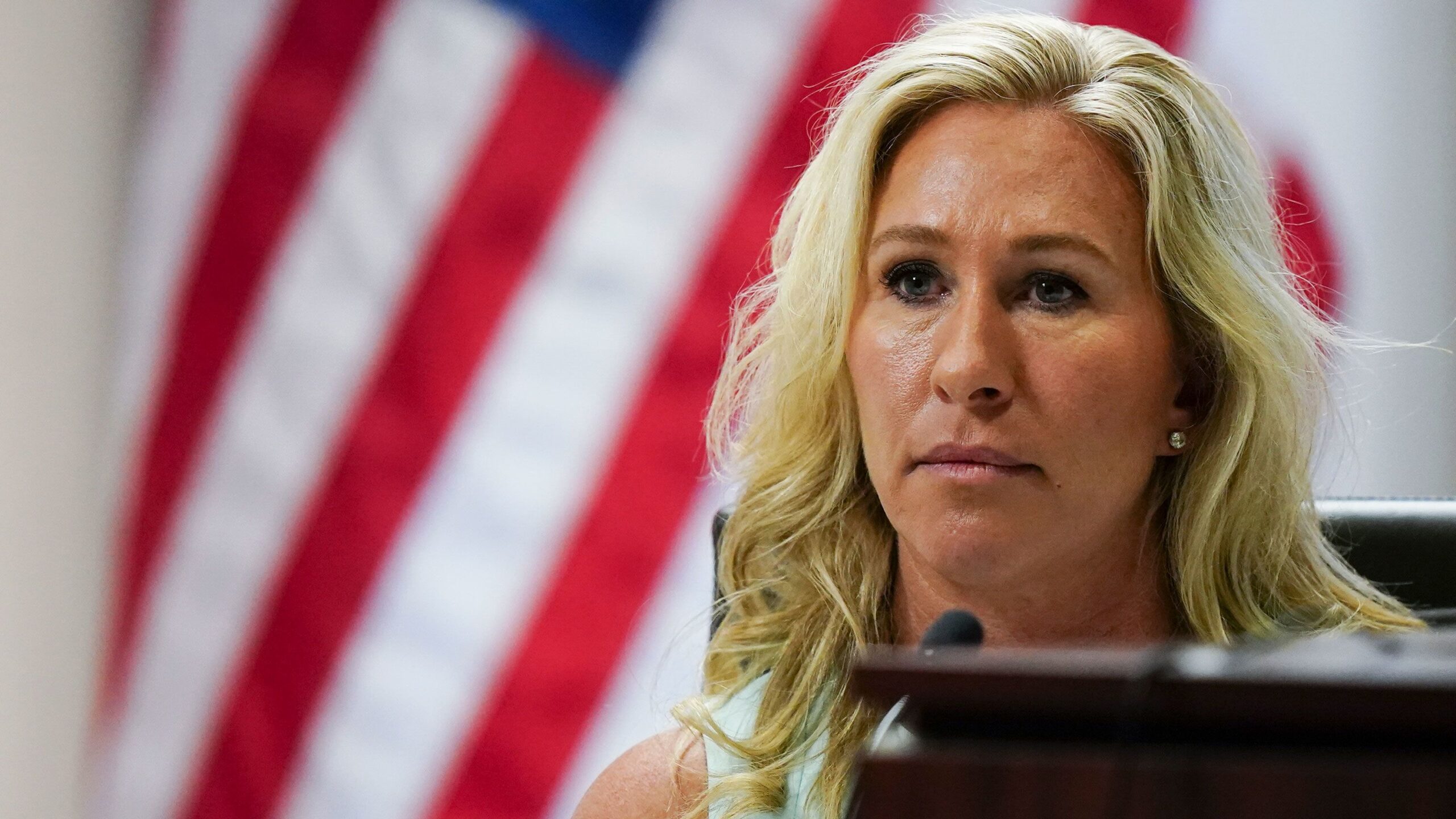
Washington, D.C., November 22, 2025 — Marjorie Taylor Greene, one of the most controversial figures in American politics, has once again seized national attention after officially announcing her resignation from Congress, effective January 5, 2026. Her departure marks a dramatic turning point in a career defined by confrontation, unwavering populism, and a political style that reshaped the Republican Party’s identity over the past five years. As reactions pour in from supporters and critics alike, the political world is reflecting on how a single figure managed to become both a conservative icon and one of the most divisive lawmakers in modern U.S. history.
A Meteoric Rise From Business to Washington Power Player
Before her ascent into Congress Marjorie Taylor Greene carved out a career in business, managing her family’s construction company and later co-founding a CrossFit gym. Her transition into political activism began in the mid-2010s, where her strong conservative beliefs and outspoken social media presence quickly gained traction among the Republican grassroots movement. When she ran for Georgia’s 14th Congressional District seat in 2020, Greene capitalized on a wave of anti-establishment momentum, positioning herself as a fearless defender of “America First” values.
Her victory was decisive, and once she arrived in Washington, she immediately aligned herself with the growing populist wing of the Republican Party — a faction loyal to former President Donald Trump. Her aggressive communication style, unapologetic criticism of Democrats, and refusal to moderate her views turned her into an overnight star among Trump supporters. But it wasn’t long before the controversies began.
A Career Built on Controversies, Clashes, and Constant Firestorms
Marjorie Taylor Greene’s tenure in Congress was anything but quiet. Early in her political career, past videos resurfaced showing her endorsing conspiracy theories, including QAnon, and making inflammatory claims about school shootings and government corruption. These revelations sparked outrage, ultimately resulting in a rare bipartisan vote in 2021 to strip her of committee assignments — a punishment few lawmakers have ever faced.
Rather than retreating, Greene doubled down. She used her public platform to attack political opponents, challenge federal spending, criticize foreign aid, and push for strict immigration controls. She frequently engaged in heated exchanges with Democrats on the House floor and in hearings, and even clashed with members of her own party, accusing GOP leadership of being “weak” or “compromised.”
These controversies did not weaken her influence; they amplified it. Marjorie Taylor Greene became one of the most recognizable figures in the MAGA movement, drawing massive crowds at rallies and dominating conservative media. To her supporters, she was a warrior fighting a corrupt political system. To her critics, she was a destabilizing force undermining democracy and inflaming political tensions.
A Stunning Break With Donald Trump
For years Marjorie Taylor Greene and Trump were politically inseparable. She defended him relentlessly and was viewed as one of his strongest allies in Washington. That is why her public break with the former president in 2025 stunned the political world. The tipping point came amid disputes over the handling of newly surfaced Jeffrey Epstein documents. Greene openly criticized Trump’s position, suggesting he was not being transparent enough.
This criticism triggered a dramatic deterioration in their alliance. Trump allies condemned Marjorie Taylor Greene, and she was gradually pushed out of influential conservative circles. For a politician whose power came from her alignment with Trump, this rift marked the beginning of a sharp political decline.
The Resignation That Shocked America
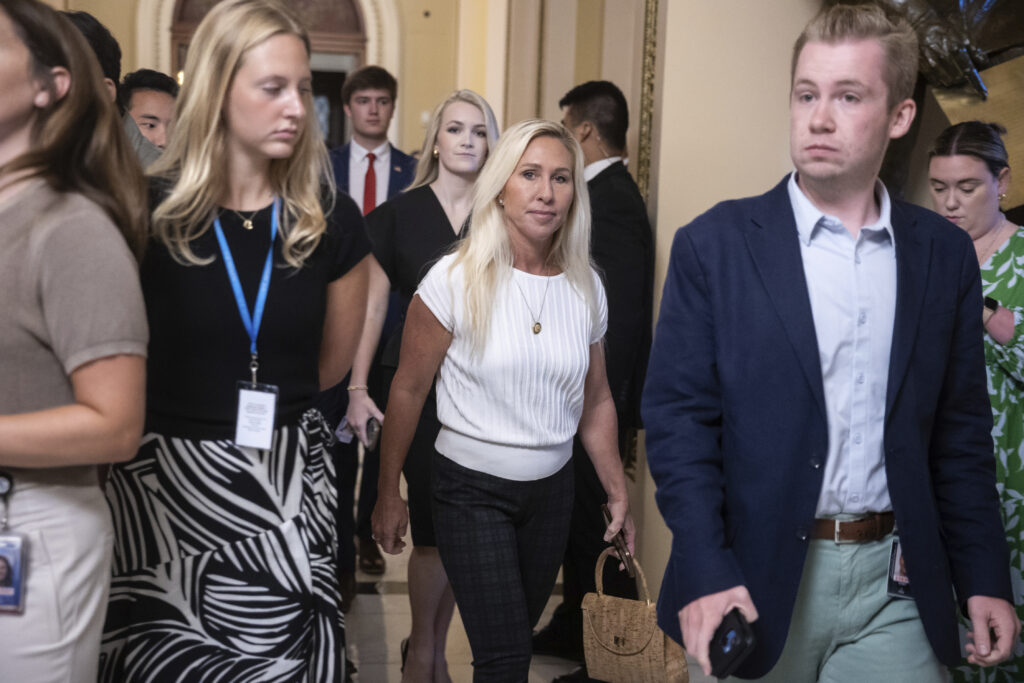
On November 2025, Greene announced she would resign from Congress, stating her final day would be January 5, 2026. She framed the decision as a shift toward “fighting for America from a different battlefield,” but analysts argue the move reflects her waning influence, internal party conflicts, and growing isolation from GOP leadership.
Her resignation marks the end of a political chapter that redefined Republican populism. Greene’s departure leaves behind unanswered questions about the future of the MAGA wing, its power dynamics, and whether a new firebrand will emerge to fill the void.
A Divisive Legacy That Will Shape U.S. Politics for Years
Marjorie Taylor Greene’s legacy is complicated, powerful, and deeply polarizing. Her rise showcased the growing strength of anti-establishment politics in America. Her controversies highlighted the shifting standards of political discourse. And her fall — punctuated by her break with Trump and eventual resignation — reveals the fragile nature of political alliances in a polarized nation.
Whether viewed as a fearless truth-teller or a symbol of political extremism, her impact on American politics is undeniable. Even as she leaves Congress, the debates she ignited and the divisions she amplified will continue to shape the country’s political landscape for years to come.






One thought on “Marjorie Taylor Greene: The Rise, Rebellion, and Resignation of America’s Most Polarizing Firebrand”