The death toll from the ongoing crackdown on protests across Iran protest has reportedly climbed to 5,002, according to human rights organizations, as former U.S. President Donald Trump announced an American “armada” was approaching the region. These developments underscore the escalating domestic crisis within Iran and the persistent geopolitical tensions between Tehran and Washington. The widespread unrest, initially sparked by the death of a young woman in morality police custody, has morphed into one of the most significant challenges to the Islamic Republic in decades.
Background: Roots of Dissent and Decades of Tension
The current wave of protests erupted in September 2022 following the death of Mahsa Amini, a 22-year-old Kurdish woman, in Tehran. Amini had been detained by the morality police for allegedly violating Iran’s strict hijab laws. Her death, which authorities attributed to a heart attack but her family and protesters claim was due to police brutality, ignited a furious response across the country. Initially focusing on women’s rights and the compulsory hijab, the demonstrations quickly broadened into a wider anti-government movement, demanding fundamental political and social reforms.
The protests quickly spread from Amini’s hometown in Saqqez, Kurdistan province, to major cities including Tehran, Mashhad, Isfahan, and Shiraz, as well as universities and schools. Women, often at the forefront, publicly removed and burned their headscarves, while chants like “Woman, Life, Freedom” became rallying cries. Students boycotted classes, and workers in some sectors initiated strikes, particularly in the oil-rich southwest. The government responded with a severe crackdown, deploying various security forces, including the Basij paramilitary militia, the Islamic Revolutionary Guard Corps (IRGC), and conventional police units. Internet access was heavily restricted, and social media platforms were blocked in an attempt to stifle communication and organization among protesters.
This internal turmoil unfolds against a backdrop of deeply entrenched animosity between Iran and the United States, dating back to the 1979 Islamic Revolution and the subsequent hostage crisis. Decades of distrust have been punctuated by periods of heightened tension and proxy conflicts across the Middle East. The U.S. withdrawal from the Joint Comprehensive Plan of Action (JCPOA), or Iran nuclear deal, in 2018 under the Trump administration, and the re-imposition of crippling sanctions, further exacerbated these tensions. The “maximum pressure” campaign pursued by the U.S. aimed to compel Iran to renegotiate a more comprehensive deal addressing its nuclear program, ballistic missile development, and regional activities. Iran, in turn, has consistently rejected these demands, viewing U.S. pressure as an infringement on its sovereignty and a destabilizing force in the region.
Key Developments: Escalation and International Reactions
The crackdown by Iranian authorities has intensified Iran protest significantly since the protests began. Human rights organizations, particularly the Norway-based Iran Human Rights (IHR) and the U.S.-based Human Rights Activists News Agency (HRANA), have been meticulously tracking the casualties. Their latest reports indicate that the death toll has reached 5,002, including a substantial number of women and children. HRANA, for instance, reported that as of early 2023, at least 470 protesters had been killed, among them 64 children and 61 women. These figures often contrast sharply with official Iranian government statements, which acknowledge far fewer deaths and primarily attribute them to “riots” and foreign instigation. Iranian state media has, however, reported the deaths of dozens of security personnel in clashes with protesters.
Internationally, the crackdown has drawn widespread condemnation. The United Nations Human Rights Office has repeatedly called for an end to the violence and for independent investigations into alleged abuses. The European Union, the United States, and other Western nations have imposed multiple rounds of sanctions on Iranian officials and entities deemed responsible for human rights violations, including the morality police, the IRGC, and various security commanders. These sanctions typically involve asset freezes and travel bans.
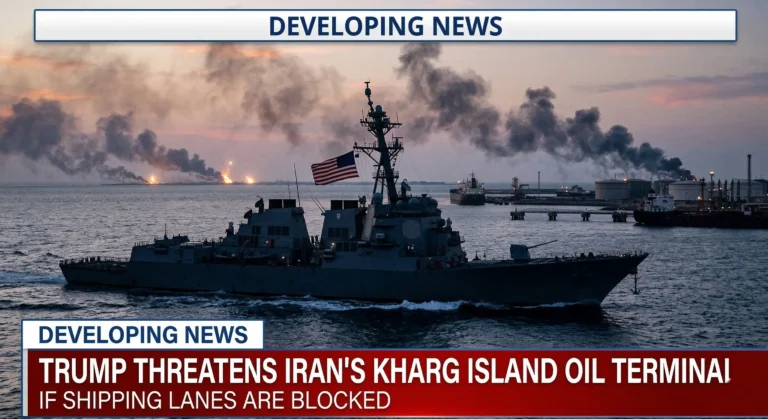
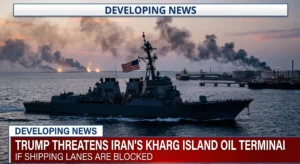
Amidst this internal turmoil and international outcry, former U.S. President Donald Trump made a notable statement regarding a U.S. “armada” approaching the region. While the specific context and timing of this statement, as referenced in the prompt, would align with a period of heightened U.S.-Iran tensions during his presidency, such rhetoric typically serves to project American military might and deter perceived Iranian aggression. During Trump’s term, the U.S. significantly bolstered its military presence in the Persian Gulf, deploying aircraft carrier strike groups, bomber task forces, and additional troops to the region. These deployments were often framed as responses to unspecified threats from Iran or as measures to protect U.S. interests and allies. For example, in May 2019, the USS Abraham Lincoln carrier strike group and a bomber task force were rapidly deployed to the Middle East, a move the Pentagon described as a deterrent against “credible threats” from Iran. Such actions were met with defiance from Tehran, which often dismissed them as psychological warfare and vowed to defend its borders.
Impact: A Nation in Crisis, A Region on Edge
The profound impact of the ongoing crackdown resonates deeply within Iran and beyond its borders. For Iranian citizens, the human cost is immeasurable. The reported deaths, injuries, and arbitrary arrests have instilled a pervasive sense of fear and injustice. Families of victims grapple with grief and often face intimidation from authorities, making it difficult to mourn or seek accountability. The widespread internet shutdowns and filtering have further isolated citizens, hindering their ability to access information and communicate freely. The economic hardship, already severe due to years of international sanctions and government mismanagement, is exacerbated by the instability, affecting livelihoods and contributing to a sense of despair among many. The psychological trauma of witnessing state violence and living under constant threat of arrest or worse will undoubtedly have long-lasting effects on the populace.
The Iranian government itself faces an unprecedented crisis of legitimacy. The protests, cutting across social classes, ethnicities, and age groups, indicate a deep-seated discontent with the ruling establishment. While the regime has demonstrated its capacity for brutal suppression, its reliance on force further erodes its domestic and international standing. The internal divisions within the political elite, though often concealed, are also under strain as different factions debate the optimal response to the unrest. The international isolation of Iran has deepened, with many nations reconsidering their diplomatic engagement and economic ties.
Regionally, the instability in Iran poses significant risks. Iran’s network of proxy groups and allies across the Middle East—including Hezbollah in Lebanon, Houthi rebels in Yemen, and various militias in Iraq and Syria—could become flashpoints if the internal situation escalates or if external powers intervene. Any direct confrontation between the U.S. and Iran, particularly if triggered by military posturing or miscalculation, would have devastating consequences for the entire Persian Gulf region, potentially disrupting global energy supplies and creating a massive humanitarian crisis. Neighboring countries, already grappling with their own challenges, closely monitor developments, fearing a spillover of instability or a surge in refugee flows.
Globally, the situation presents a complex diplomatic challenge. International efforts to revive the JCPOA have stalled, and the focus has shifted to condemning human rights abuses. The delicate balance of power in the Middle East is further complicated, with implications for global security and economic stability.
What Next: Uncertain Futures and Potential Paths
The trajectory of the protests in Iran remains highly uncertain. While the government’s harsh crackdown has managed to suppress large-scale street demonstrations at times, the underlying grievances persist. The movement has shown remarkable resilience, adapting to government tactics by shifting to smaller, decentralized acts of defiance, such as nightly chants from rooftops, widespread graffiti, and continued boycotts. The future of the protests hinges on several factors: the sustained courage and organization of the demonstrators, the government’s capacity and willingness to continue its brutal repression, and the extent of international support and pressure. Some analysts suggest that while a revolutionary overthrow is unlikely in the short term, the protests represent a fundamental shift in the social contract between the state and its citizens, potentially leading to long-term societal change.
The Iranian government’s strategy is likely to continue its dual approach of repression and limited, often cosmetic, concessions. There have been occasional hints of softening stances on issues like the morality police, but these have largely been dismissed as insincere by protesters. The regime’s priority remains maintaining its grip on power, and it has consistently shown a willingness to employ extreme force to achieve this. Any significant policy changes, particularly regarding the compulsory hijab or political freedoms, appear unlikely in the immediate future, as they would be perceived as signs of weakness.
The international response will likely involve a continuation of targeted sanctions against Iranian officials and institutions responsible for the crackdown. There may also be increased calls for independent international investigations into human rights abuses. Diplomatic efforts, though currently stalled, could resume if conditions change, possibly focusing on de-escalation and humanitarian concerns. However, the prospect of a unified and effective international response is complicated by geopolitical divisions, particularly regarding the roles of China and Russia, who maintain closer ties with Tehran.
For the United States, the “armada” rhetoric, whether from a former president or current administration, typically signifies a policy of deterrence and a readiness to protect U.S. interests. While direct military intervention is generally considered a remote possibility due to its immense risks, the U.S. will likely continue its “maximum pressure” campaign through sanctions and diplomatic isolation. The objective would be to compel Iran to cease its nuclear advancements, curb its regional activities, and improve its human rights record. The question remains whether this pressure can lead to negotiations or if it will only deepen the standoff.
The regional implications are equally complex. The prospect of further U.S.-Iran escalation will keep regional actors on high alert. Countries like Saudi Arabia and Israel, long-standing rivals of Iran, will closely monitor any U.S. military movements or policy shifts, potentially adjusting their own security postures. The wider Middle East, already volatile, faces the ongoing risk of proxy conflicts intensifying or new ones emerging. Ultimately, the coming months will be critical in determining whether the current unrest in Iran subsides, escalates, or transforms into a protracted struggle for fundamental change, with profound consequences for both the Iranian people and global stability.